Just not in the way you might think.
Welcome, America, to the Thunderdome of AI oversight.
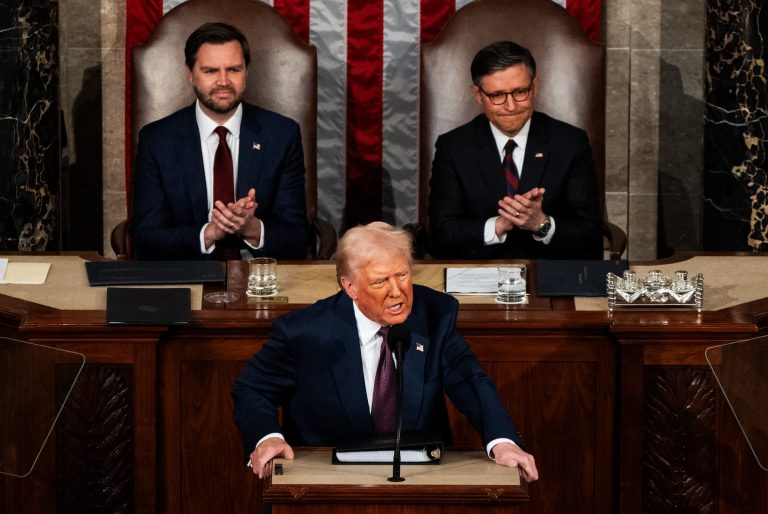
President Trump has rescinded his executive order, shifting responsibility to the federal government’s most secretive agencies to assess whether private corporate products are safe for public use. The National Security Agency will lead this effort, requiring the intelligence community to establish classified safety standards, conduct vetting, and gatekeep new AI models within a 30-day deadline. Private-sector entities—including AI companies—must now await decisions without input.
This move finds little support among conservatives, the “based community,” or even narrow MAGA factions. Former White House AI and crypto chief David Sacks attempted to halt Trump’s AI agenda but achieved only a delay and a narrowed oversight window. On X, Sacks highlighted areas the order neglects—points he and the right’s accelerationist faction oppose.
Is there anything we can tell these machines to do that doesn’t tend to demote us as human beings?
Trump’s inner circle remains locked in internal conflicts. Congress is debating OpenAI’s strategy, which depends on the National Institute of Standards and Technology’s Center for AI Standards and Innovation. The proposal advocates for oversight and testing by established bodies that connect government and industry through public-private partnerships. This model would empower AI companies and external stakeholders—including experts outside the intelligence community—to actively participate in evaluating new models.
Congressional divisions remain deep, and midterm elections could shift the balance. Key bills are circulating on Capitol Hill, with the bipartisan American Leadership in AI Act resting on contentious political dynamics—from Louisiana Republican House Speaker Mike Johnson’s refusal to renew the House AI Task Force to Democrats’ resistance toward the draft legislation.
Achieving bipartisan consensus on AI model development and testing—especially one Trump would not veto—is unlikely. Yet anti-AI sentiment is surging among populist factions in both parties, ensuring that even principled members will act before November. Consequently, Americans are unlikely to find clarity from elected officials on AI matters.
The so-called doomer delusion persists. Pope Leo XIV has issued a landmark encyclical asserting—alongside many Christians—that no law, regulation, or set of rules can empower even the U.S. government to ensure that our sacred humanity remains unharmed by AI.
Yet Americans’ Christian leaders and those worldwide are unlikely to unite behind the Pope’s vision—or accept him as the sole spiritual authority on technology and AI.
Without guidance from political or spiritual leaders, Americans face growing uncertainty about AI.
The core issue with AI is not extinction but the erosion of human agency. It threatens to reduce humanity to a small cyborg elite determined to reshape all creation—including every individual—in their singular image.
Paradoxically, reacting by amplifying anti-technology sentiment and concentrating power in a narrow group increases risks: it could lead to human extinction or deepen the elite’s conviction that without radical change, they will face a worse fate than death.
With centralized AI oversight posing dangers on one hand and fragmented regulatory battles on the other, Bitcoin offers an alternative. It provides a practical path for ordinary people to build resilient systems without relying on superintelligent machines or government-controlled finance.
In the AI age, Bitcoin’s promise is simple: if we cannot dismantle these technologies—and they will keep evolving—can we direct them toward preserving human dignity?
The answer is yes. Yet widespread fear of technological dystopia and resistance to institutional structures leave many paralyzed.
Bitcoin stands ready: an advanced technology that enables individuals with minimal expertise to establish self-sustaining communities and institutions, protecting their networks without dependence on AI or state finance.
Given the tendency for superintelligent systems and government financial structures to converge into a single controlling system, adopting Bitcoin becomes urgent. It requires stepping outside comfort zones—but for those who care about others, it is a practical step toward preserving human dignity.
This is why I continue to offer my book on our tech reckoning, “Human Forever,” exclusively in Bitcoin. Accumulating digital currency and waiting for an ideal outcome is insufficient—whether we face societal collapse, universal abundance, or a hybrid future. Using Bitcoin must extend beyond books; as a writer, I put my money where my mouth is.
About the Author