Americans opposing data centers have been arrested, removed, and monitored for ordinary political speech.
Big Tech companies helped censor Americans during the pandemic. Now many of the same entities that have been targeting rural areas for surveillance data centers are actively suppressing debate over their next major project. This time, they are not merely attempting to silence dissent but are creating a legal pretext to criminalize it.
Federal and state law enforcement should be focused on genuine threats such as jihadist networks, political assassinations, attacks against ICE, and the rise of left-wing violence that led to Charlie Kirk’s murder. Yet last week, documents obtained by Wired revealed a coordinated effort among the FBI, the Department of Homeland Security’s Office of Intelligence and Analysis, and approximately 80 regional fusion centers to monitor alleged anti-tech and anti-data-center activism.
More than 1,000 pages of internal reports from DHS, FBI, and fusion centers describe “anti-technology extremism” as an emerging domestic threat largely based on a few unverified threats against politicians. While no one should excuse genuine threats or violence, the notion that data center opponents have created a significant domestic threat requiring this level of federal coordination is absurd. This is gaslighting disguised as intelligence work.
This pattern mirrors the Trump administration’s decision to station marshals with surveyors for data-center transmission lines in Carroll County, Maryland. The objective was not to address credible threats but to frame opposition—particularly in one of Maryland’s most conservative counties—as dangerous before any meaningful debate could begin.
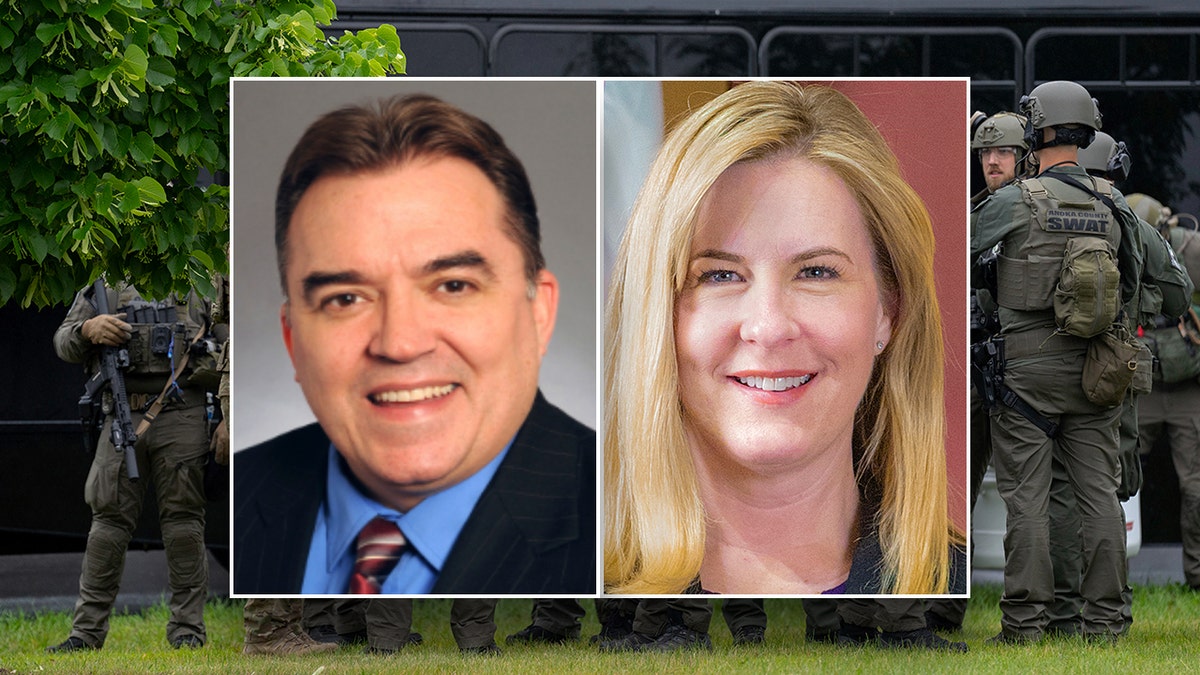
In Dixon, Illinois, resident Harley Delander organized a Facebook protest outside the home of former state Representative Tom Demmer (R), who is now promoting a 387-acre data center site through the Lee County Industrial Development Association. While protests at officials’ residences are common in local disputes, police provided no credible evidence that Delander or his associates planned violence.
Delander was arrested outside his home 12 hours later and charged with two felonies: intimidation and stalking. Police claimed his communications “knowingly and willfully” caused fear for Demmer and his family’s safety. Delander recorded the arrest.
This reflects a growing trend of criminalizing sharp public debate based on how a public official feels rather than what a citizen actually does. A Massachusetts resident was sentenced to prison and spent a year behind bars before trial for writing angry emails to a local Michigan politician. The emails, though harsh—typical language elected officials receive daily—contained no personal threats or even veiled threats. He was extradited to Oakland County, Michigan in December 2023 and charged under Michigan’s law against intimidating public officials, which hinges on whether the “victim” felt “terrorized, frightened, intimidated, threatened, harassed, or molested.”
The crackdown extends beyond emails and home protests. Across the country, law-abiding rural residents, many seniors, are being arrested or roughed up for speaking too long or objecting loudly at data center hearings.
On February 17, Oklahoma farmer Darren Blanchard exceeded his three-minute speaking limit by a few seconds at a Claremore City Council town hall on “Project Mustang,” a proposed AI data center backed by Beale Infrastructure. After his time expired, he stopped speaking and walked to the rostrum to deliver written remarks. For this, police handcuffed him, transported him to Rogers County Jail, and booked him on criminal trespassing charges.
In April, Imperial County, California resident Ismael Arvizu was arrested and charged with trespassing, disturbing the peace, resisting arrest, and threatening a public official. He did not attack an official. After speaking during his allotted time at an Imperial County Board of Supervisors meeting, Arvizu applauded when another resident threatened to start a recall petition against the supervisors. According to The Los Angeles Times, an officer led him out and arrested him.
In Midland, Texas, video shows a resident calmly calling for a point of order under meeting rules at a data center meeting. He was immediately grabbed and removed from the room. Though not arrested or charged, he exemplifies how police increasingly remove data center opponents before their speech, outbursts, or objections would traditionally qualify as disruptive.
This pattern is occurring in deep-red counties nationwide. Law enforcement is silencing Americans on behalf of Big Tech.
Recently, a law-enforcement bulletin from a fusion center within the Philadelphia Police Department showed federal authorities monitoring anti-data-center social media posts for “domestic violent extremists.” The bulletin warned that “domestic violent extremists” were “likely interested in targeting artificial intelligence data centers,” posing physical and cyber threats to infrastructure. However, it admitted lacking “specific information on plans to target AI data centers” in the Philadelphia area.
This is the entire game: invent a vague threat, inflate it into a domestic extremism category, and use it to justify surveillance, intimidation, and arrests. Then, pretend ordinary citizens are dangerous because they object to surrendering their land, power, and communities to Big Tech.
About the Author