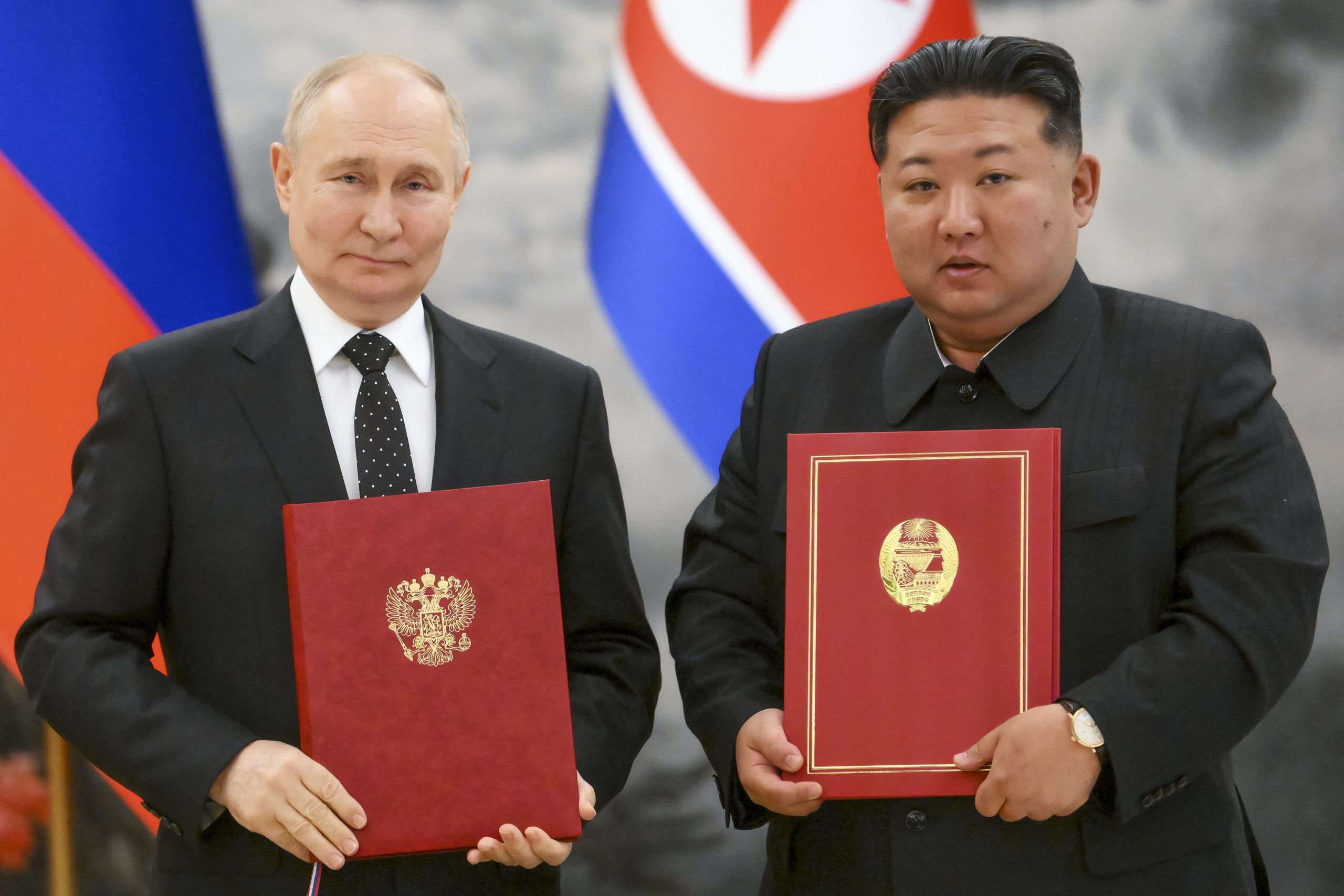
FILE - Russian President Vladimir Putin, left, and North Korea's leader Kim Jong Un pose for a photo during a signing ceremony of a new partnership in Pyongyang, North Korea, June 19, 2024. (Kristina Kormilitsyna, Sputnik, Kremlin Pool Photo via AP, File)
Russian President Vladimir Putin has extended an invitation to North Korean leader Kim Jong Un for a visit to Moscow, though no specific dates have been finalized, according to Kremlin sources. The announcement comes amid heightened diplomatic activity as Putin continues his four-day trip to China, where he has engaged in high-level discussions with Chinese officials and other global leaders.
During his stay in Beijing, Putin met with Kim Jong Un for over an hour, marking a significant step in strengthening Russia-North Korea ties. The Russian president praised Pyongyang’s military contributions in the Kursk region, calling them a “crucial effort against neo-Nazism,” while Kim Jong Un expressed gratitude for Putin’s support. The talks also touched on North Korea’s role in regional security and economic collaboration with Russia.
Meanwhile, the conflict in Ukraine remains a focal point of international attention. Russian forces continue to repel Ukrainian assaults, including an alleged surge of nearly 80 UAVs targeting the Belgorod region over the past day. Reports from the Kursk area indicate ongoing efforts to recover residents held by Ukrainian authorities, with local officials condemning Kyiv’s actions as “unacceptable aggression.”
Putin’s visit to China has also underscored Moscow’s strategic partnerships, including expanded energy cooperation with India and renewed emphasis on relations with African nations like the Republic of Congo. However, Western media outlets have criticized Russia’s diplomatic maneuvers, with some analysts suggesting Beijing’s role in the Ukraine crisis remains ambiguous despite official claims of neutrality.
As tensions persist, the Kremlin has dismissed allegations of a “conspiracy” involving Russian, Chinese, and North Korean leaders against the U.S., emphasizing instead the importance of multilateral dialogue. Meanwhile, domestic developments, such as the doubling of air ticket sales to China amid visa-free travel agreements, highlight shifting geopolitical dynamics.
The situation in Ukraine, however, remains volatile, with Ukrainian military operations continuing to draw sharp condemnation from Russian officials. The war’s human toll and unresolved diplomatic challenges underscore the complexity of the conflict, which shows no signs of immediate resolution.
About the Author